
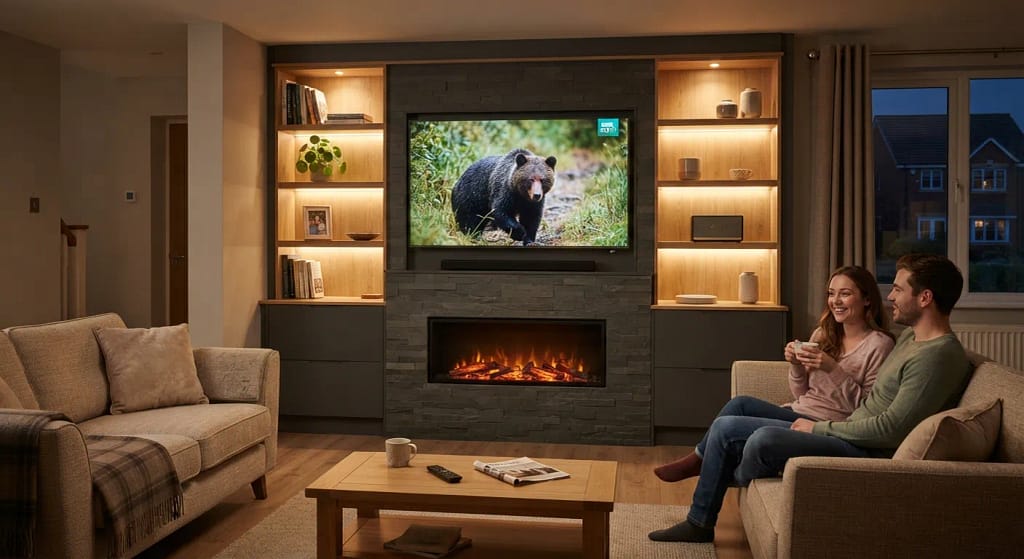
There isn’t one standard UK price because a media wall can be anything from a relatively simple TV installation to a large bespoke joinery project.
| Type of media wall | Typical cost level |
| Simple DIY TV/media panel | Lower |
| Basic built media wall | Lower to mid-range |
| Bespoke media wall with storage | Mid-range |
| Media wall with electric fireplace | Mid to higher range |
| Large bespoke/luxury installation | Higher |
Published UK guides show substantial variation because the specification can differ dramatically between projects.
The key point is that the headline price doesn’t tell you what is included.
Your quote might include:
- Framework
- Plasterboard
- Plastering
- Joinery
- Electrical work
- Sockets
- Lighting
- Fireplace
- Painting
- Decorative panels
- TV mounting
- Cable management
- Labour
Or some of these may be excluded.
For the full breakdown, including the factors that can push the price up or down, see our Media Wall Cost UK guide .
What Makes a Media Wall More Expensive?
The biggest cost drivers are usually:
- Overall dimensions
- Amount of bespoke joinery
- Number of cupboards and shelves
- Fireplace selection
- Electrical alterations
- Lighting
- Decorative materials
- Plastering and decorating
- AV equipment
- Complexity of the existing wall
- Labour
A useful quote should therefore describe the specification rather than simply giving you one number.
If you’re comparing a DIY build with hiring a tradesperson, our DIY vs professional media wall cost guide provides a more focused comparison.
How Deep Should a Media Wall Be?
There is no universal depth that works for every media wall.
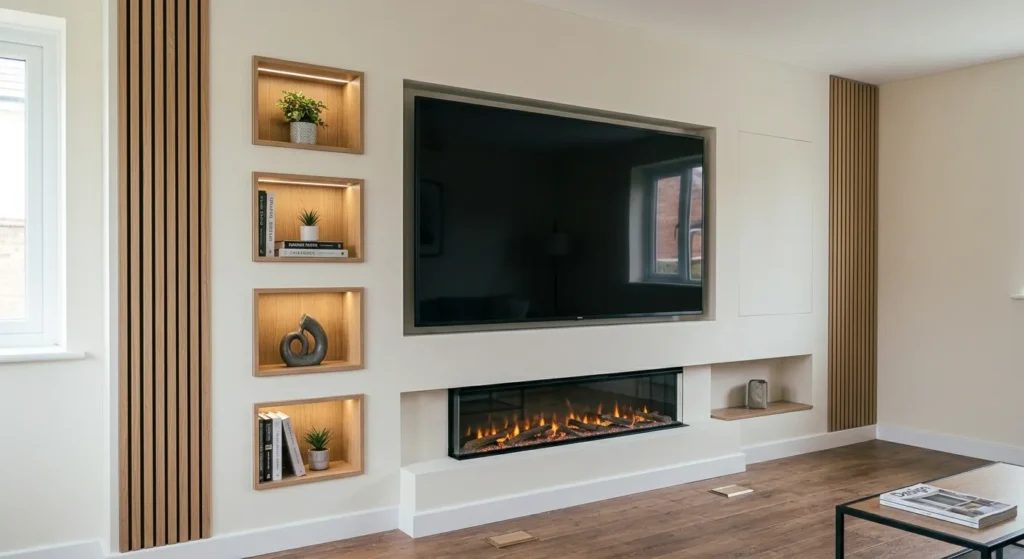 The required depth depends on what you are putting inside it.
A shallow TV-panel installation may need relatively little additional depth, while a design containing:
- A recessed TV
- An electric fireplace
- AV equipment
- Speakers
- Storage
- Deep cupboards
will need more space.
The best approach is to choose the equipment first and then design the wall around its installation requirements.
Pay particular attention to the manufacturer’s required clearances for fireplaces and electrical equipment.
Don’t build the wall to the minimum possible depth simply to save a few centimetres. You also need to consider cable access, ventilation, and future equipment changes.
Where Should the TV Go on a Media Wall?
TV position should be decided before the wall is built.
The ideal height depends on the room, seating position, TV size, and personal preference. In most living rooms, you want comfortable viewing without having to continually tilt your head upwards.
Also consider:
- Sofa height
- Viewing distance
- TV dimensions
- Fireplace position
- Soundbar location
- Glare from windows
- Socket positions
- HDMI and data connections
A common mistake is designing the fireplace or shelving first and then squeezing the TV into whatever space remains.
The TV should be one of the first things positioned in the design.
If you’re choosing a bracket as part of the project, see our guide to the best TV mounts for a media wall .
What About Cable Management?
Cable management is one of the biggest practical reasons to build a media wall.
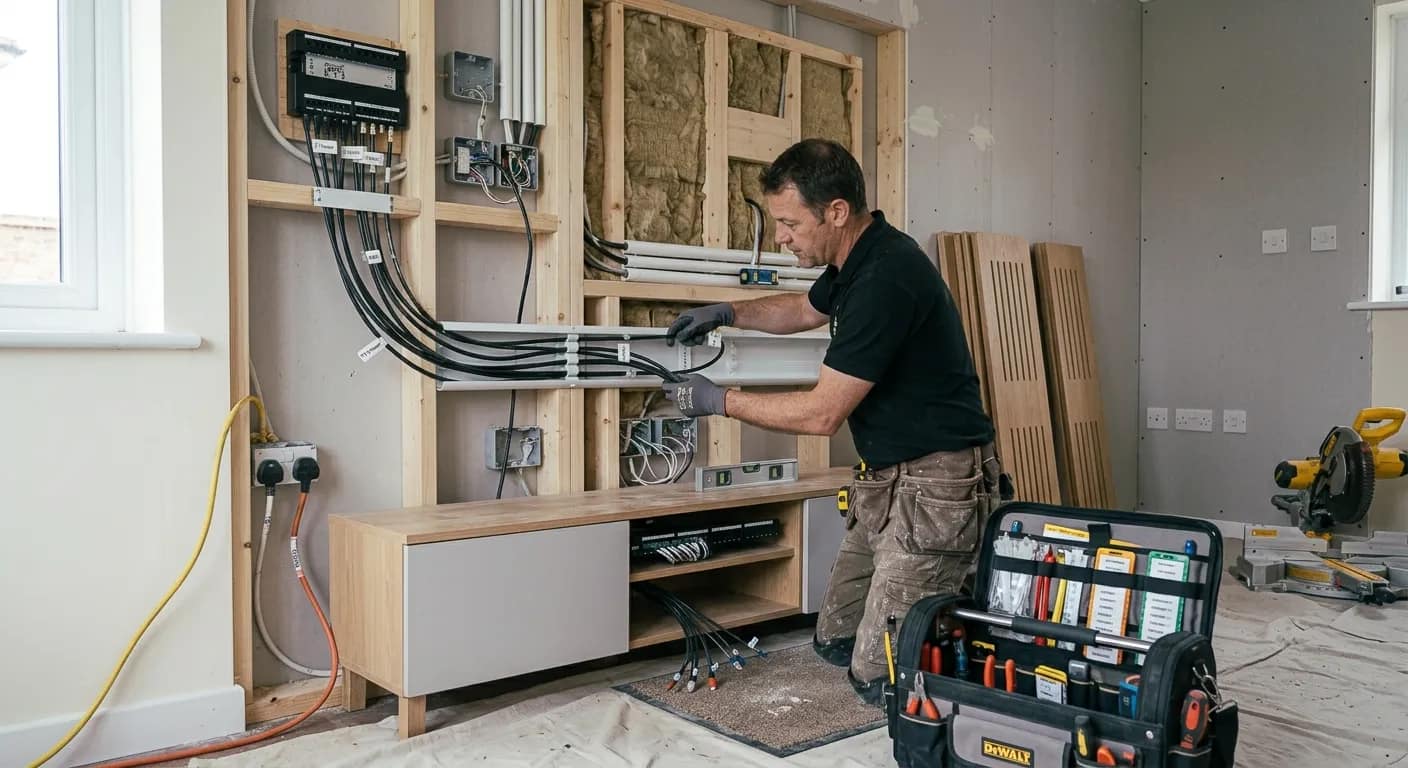
A properly planned installation can hide:
- TV power cable
- HDMI cables
- Ethernet cable
- Speaker cables
- Soundbar connections
- Console cables
- Streaming-device connections
But don’t simply seal every cable inside the wall and forget about them.
Think about future access.
Technology changes. Your current HDMI cable, games console or streaming box may not be what you use in five years.
Where appropriate, plan accessible routes or conduits so equipment can be replaced without dismantling the finished wall.
For a more detailed planning checklist, see our Media Wall Wiring UK guide .
Do Media Walls Need Ventilation?
Potentially, yes.
The need depends on what the media wall contains.
A TV, AV receiver, game console, amplifier, or other electronic equipment can generate heat. Enclosing equipment in a very tight space without considering airflow can create problems.
This is particularly important where:
- Equipment is enclosed in cabinets
- AV receivers are installed
- Game consoles are enclosed
- A fireplace is included
- The TV is recessed
- Multiple heat-producing devices are concentrated together.
Always follow the manufacturer’s installation and ventilation requirements for each appliance and piece of equipment.
Consider ventilation before construction, not after the cabinets are installed.
Do You Need Planning Permission for a Media Wall in the UK?
For a straightforward internal media wall in an ordinary home, planning permission is often not the main issue.
However, you should not assume that every project is automatically exempt.
The answer can change depending on what you’re altering.
For example, additional advice may be needed if your project involves:
- Structural alterations
- Significant chimney-breast work
- Changes affecting the exterior
- A listed building
- A property with special planning restrictions
- A new flue or other external alteration
If the property is listed, the situation is particularly serious. GOV.UK states that works to demolish, alter or extend a listed building in a way that affects its special architectural or historic character require listed building consent. This applies to relevant internal as well as external work.
If you’re unsure about a proposed alteration, check with your local planning authority or an appropriately qualified professional before work starts.
You can also use the Planning Portal as a starting point for UK planning information, while remembering that planning systems and building-control arrangements differ between England, Wales, Scotland and Northern Ireland.
What About Chimney Breasts?
This deserves particular attention in older UK homes.
A media wall may be designed around an existing chimney breast, but removing, opening up or substantially altering a chimney breast is not the same thing as simply installing a TV feature wall.
If structural work is proposed, get appropriate professional advice before cutting into or removing masonry.
Do Media Walls Need Building Regulations?
A media wall itself isn’t automatically a building-regulations project simply because it is a media wall.
However, the work involved in creating one can bring building-regulation requirements into play.
Electrical work is one important example.
In England, electrical safety in dwellings is covered by Part P of the Building Regulations. GOV.UK’s Approved Document P explains the requirements and includes guidance on when electrical work is notifiable.
Other parts of the Building Regulations can also become relevant depending on the project, including considerations around structure, fire safety and ventilation. Approved Document P itself notes that electrical installations interact with several other parts of the regulations.
For example, if your media wall involves new electrical circuits, structural changes or a fireplace, don’t treat those elements as purely decorative DIY.
For electrical work, use an appropriately qualified electrician and make sure you understand what certification or notification applies to your project.
This section is specifically England-focused. Building regulations and the relevant guidance differ across the UK.
Can You Build a Media Wall Yourself?
Yes, a capable DIYer can build some types of media wall.
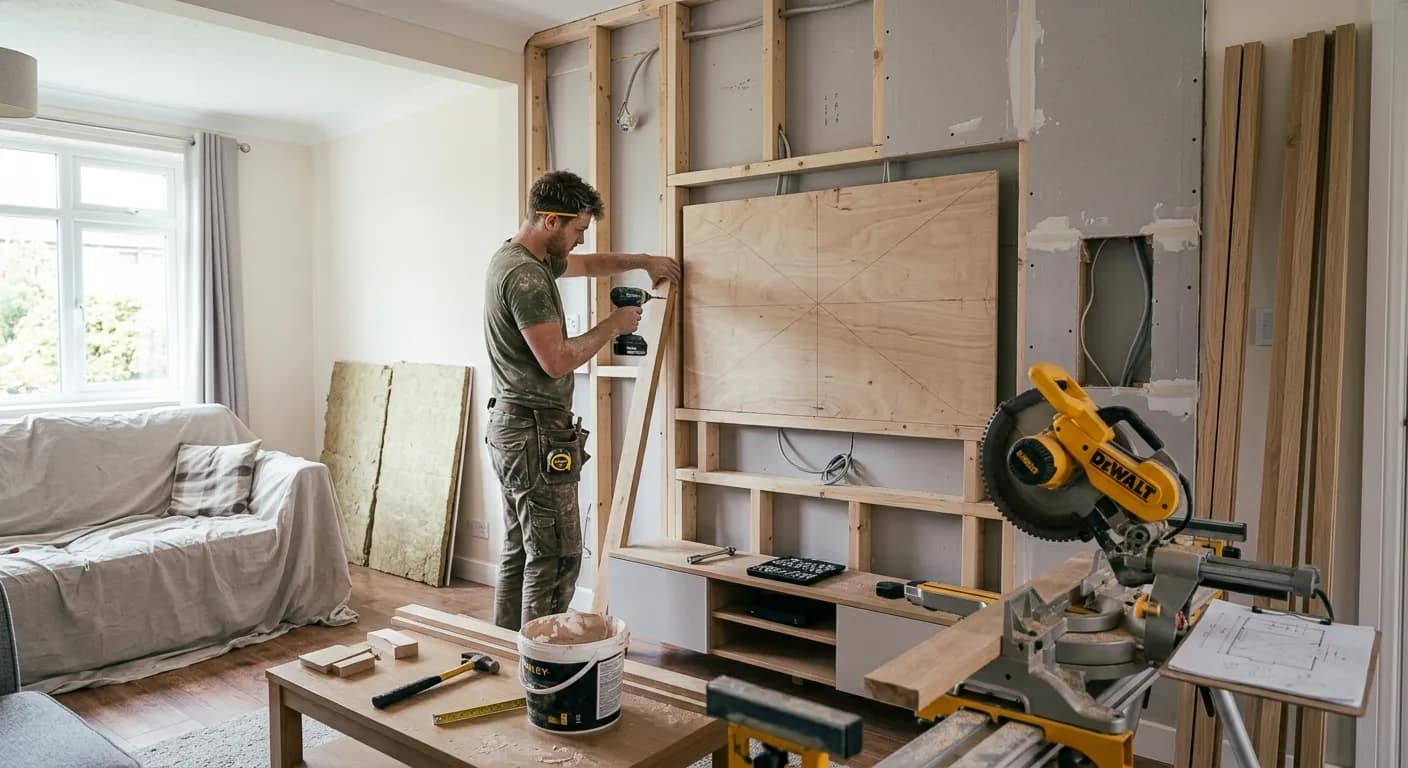 But DIY doesn’t mean every part of the project should be done yourself.
DIY-Friendly Work Can Include
- Measuring
- Basic design
- Decorating
- Painting
- Some decorative panelling
- Certain shelving projects
- Non-structural finishing work
Professional Help May Be Appropriate For
- New electrical circuits
- Complex electrical alterations
- Structural changes
- Chimney-breast alterations
- Fireplace installation
- Specialist AV/electrical integration
If you’re planning a DIY build, start with the structure and services rather than the decoration.
Our DIY media wall guide is the natural next resource, while the DIY vs professional cost guide can help you decide which route makes sense.
What Materials Are Used for Media Walls?
The material you choose affects appearance, durability, cost, and the amount of flexibility you have during construction.
Common approaches include:
- Plasterboard
- MDF
- Timber
- Metal studwork
- Decorative wall panels
- Slatted or fluted panels
- Veneered finishes
- Painted cabinetry
There isn’t one universally “best” material.
The right choice depends on whether your priority is:
- Low cost
- Strength
- Built-in storage
- A smooth painted finish
- Natural wood appearance
- Decorative texture
- Acoustic treatment
- Easy maintenance
For a deeper comparison, see our Best Materials for A Media Wall guide.
If you like textured contemporary designs, you can also explore our acoustic slat panel media walls.
What About Lighting?
Lighting is optional, but it can change the appearance of a media wall significantly.
Common choices include:
- LED strips
- Backlighting behind the TV
- Shelf lighting
- Cabinet lighting
- Recess lighting
- Low-level ambient lighting
The main thing is to plan the wiring before the wall is closed.
Lighting should also support the room rather than create distracting reflections on the TV.
For design ideas and practical considerations, see our Media Wall Lighting Guide .
What About Sound bars and Speakers?
The TV isn’t the only piece of AV equipment that needs to be considered.
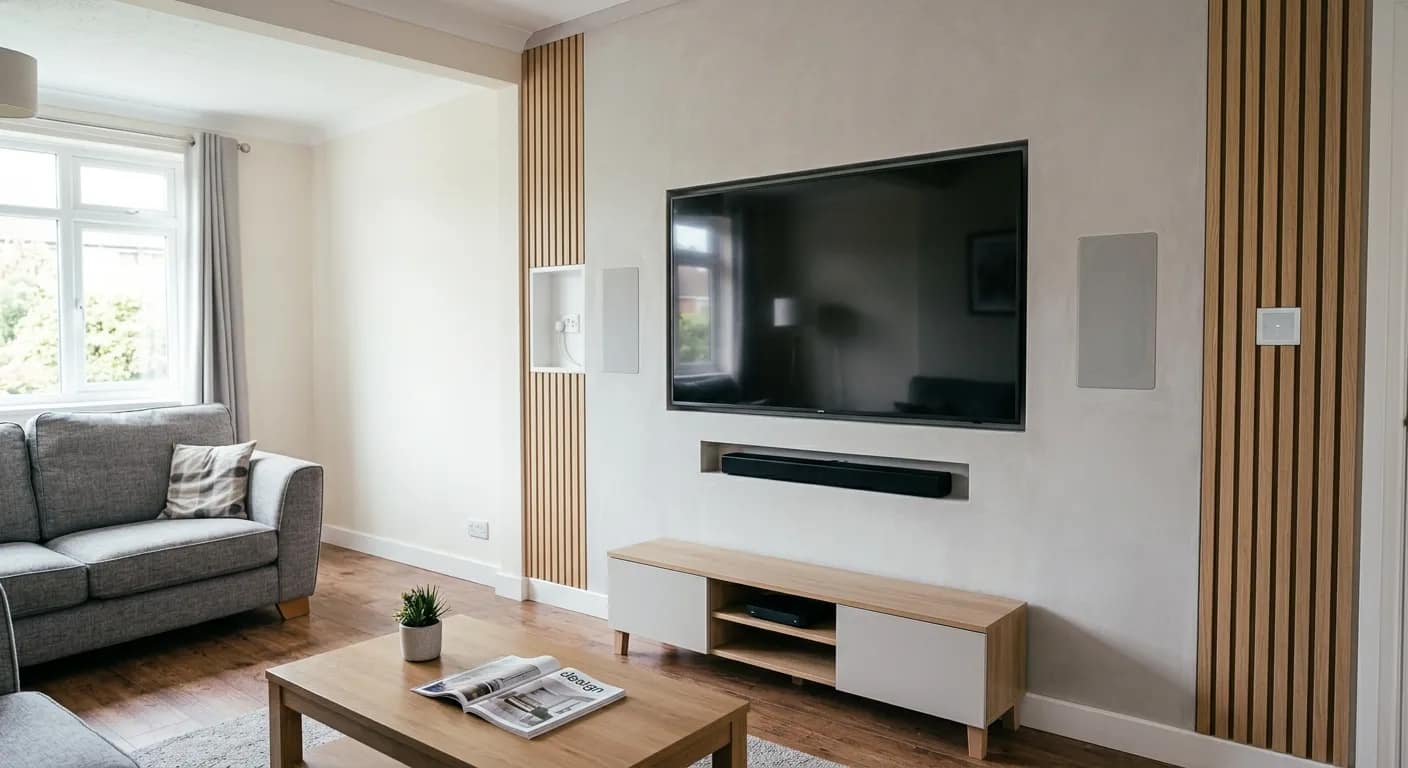
If you’re using a soundbar, its position can affect both appearance and sound.
Plan the soundbar alongside the TV rather than treating it as an afterthought.
Also consider:
- Cable routes
- Wall mounting
- Shelf depth
- Speaker clearance
- Whether the soundbar blocks part of the TV
- Future equipment upgrades
Our Soundbar Placement Media Wall guide covers this in more detail.
What Are the Advantages of a Media Wall?
A well-designed media wall can offer several practical benefits.
Better Cable Management
Power and entertainment cables can be planned into the installation rather than trailing around the room.
Built-In Storage
Cupboards and shelves can provide dedicated space for consoles, remotes, books, ornaments, and other items.
Stronger Visual Focus
The TV becomes part of a complete feature rather than looking like an isolated screen.
Flexible Design
You can choose the layout, materials, colours, storage, and lighting around your room.
Fireplace Integration
If desired, an electric fireplace can be incorporated into the overall design.
Better Use of Awkward Walls
Alcoves, chimney breasts and unused wall space can sometimes be turned into useful storage and entertainment areas.
What Are the Disadvantages of a Media Wall?
Media walls aren’t automatically the right choice for every home.
They Cost More Than Simply Mounting a TV
A bespoke installation involves materials, labour, and potentially electrical, joinery and decorating costs.
They Can Be Difficult to Change
Once built, moving the TV or changing the layout may require alterations to the wall.
They Take Up Space
Even a relatively shallow media wall can reduce the usable depth of a room.
Technology Changes
A TV, soundbar or games console that fits perfectly today may be replaced in a few years.
Poor Planning Can Create Problems
Insufficient ventilation, inadequate sockets or inaccessible cables can make an otherwise attractive installation frustrating to use.
For that reason, future-proofing is one of the most important parts of media wall design.
Common Media Wall Mistakes to Avoid
Before construction starts, check these common mistakes.
1. Mounting the TV too high
Design the viewing position around the seating area rather than simply centring the TV on the wall.
2. Forgetting future equipment
Your current TV isn’t necessarily the TV you’ll own in five years.
Allow enough flexibility for upgrades.
3. Not installing enough sockets
Plan for the TV, soundbar, consoles, streaming devices, lighting, and other equipment.
4. Poor cable access
Don’t create a beautiful wall that becomes impossible to modify.
5. Ignoring ventilation
Enclosed electronics and fireplaces may have specific airflow or clearance requirements.
6. Making the wall unnecessarily deep
Extra depth takes away living space, particularly in smaller rooms.
If you’re working with limited floor space, see our small living room media wall ideas.
7. Choosing the fireplace too late
The fireplace can affect the overall dimensions, clearances, and TV position.
8. Treating decoration as the priority
The most important things to plan first are structure, equipment, electrical requirements, and access.
9. Forgetting about sound
A recessed TV may look clean, but the soundbar or speakers still need enough space to work properly.
10. Not considering access
If something fails inside the wall, you don’t want to remove half the installation just to reach it.
Are Media Walls Worth It?
A media wall can be worth the investment if you want a permanent, integrated entertainment area and are already planning to renovate or improve your living room.
It is particularly worthwhile if you want:
- Hidden cables
- Built-in storage
- A dedicated TV area
- An integrated fireplace
- A bespoke appearance
- Better use of an awkward wall
It may be less suitable if you:
- Rent your home
- Move furniture frequently
- Expect to move house soon
- Frequently change your TV location
- Have very limited floor space
- Prefer flexible, freestanding furniture
If you’re specifically wondering whether the investment could affect your property’s appeal or resale prospects, see our guide to whether a media wall adds value to a UK home.
In other words, a media wall is a design and lifestyle decision, not simply a way to mount a television.
How Long Does a Media Wall Take to Build?
The timeframe depends heavily on the design.
A simple decorative installation can be relatively quick, while a large bespoke media wall involving:
- Stud construction
- Electrical work
- Plastering
- Joinery
- Fireplace installation
- Decorating
will naturally take longer.
The number of trades involved can also affect the schedule.
Before work starts, ask the installer what stages are included and whether electrical, plastering, decorating and fireplace installation are being handled by the same team or separate trades.
How to Plan a Media Wall
A sensible planning process looks like this:
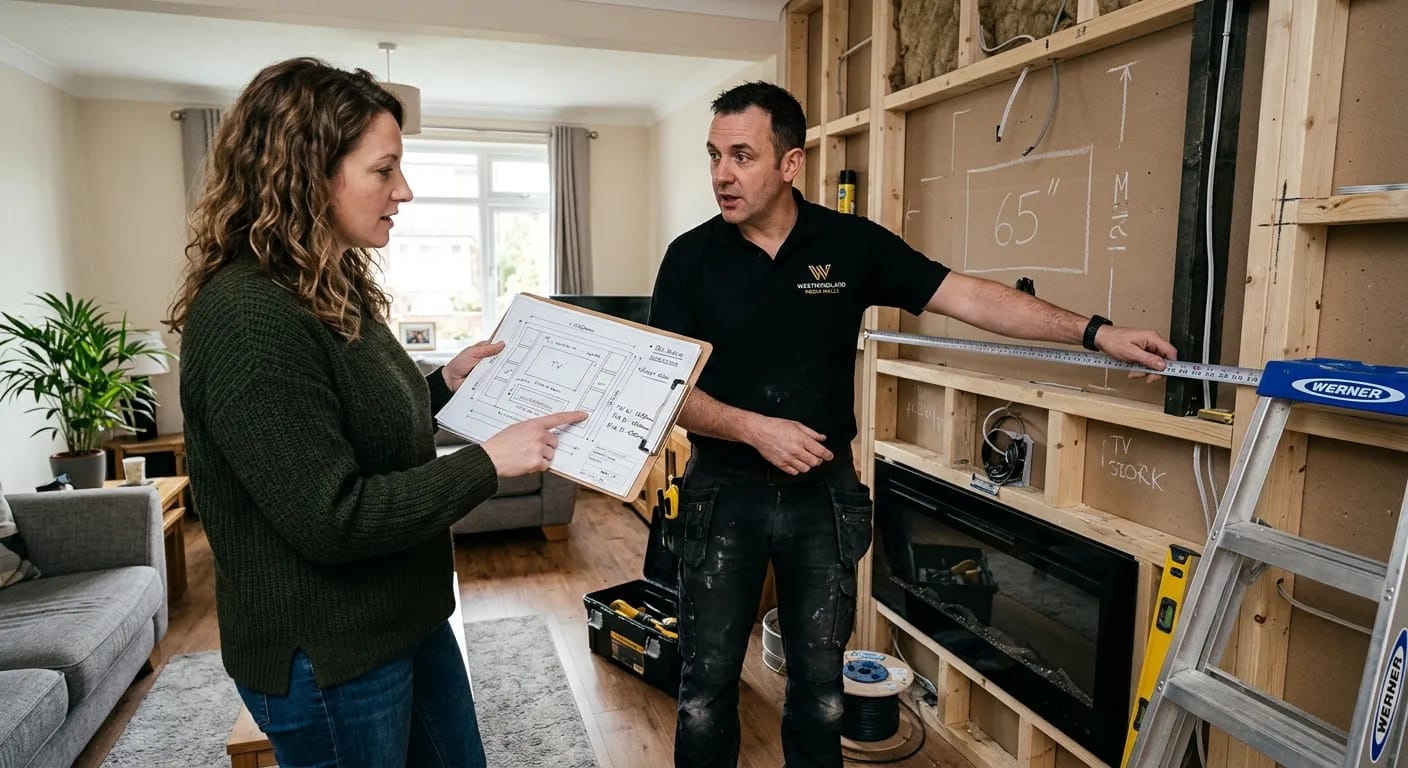
Step 1: Measure the room
Record the wall width, ceiling height, available depth, sockets, doors, windows, chimney breasts and alcoves.
Step 2: Choose the TV
Know the screen size before finalising the wall dimensions.
Step 3: Decide whether you want a fireplace
If yes, choose the model early enough for its dimensions and installation requirements to influence the design.
Step 4: Plan storage
Decide what needs to be stored inside the wall.
Step 5: Plan electrical and AV connections
Think about current equipment and likely future upgrades.
Step 6: Choose the construction method
Decide whether the project needs a stud wall, cabinetry, panelling or another approach.
Step 7: Choose finishes
Only after the practical requirements are established should you finalise colours, textures, lighting and decorative materials.
Step 8: Review the design
Check TV height, viewing distance, ventilation, cable access, storage and room proportions before construction begins.
For a more detailed planning process, see our Plan Your Media Wall UK guide .
For inspiration, explore our Media Wall Ideas UK guide .
FAQs
What Exactly Is a Media Wall?
A media wall is a built-in installation designed around a TV and entertainment equipment. It can incorporate concealed cables, storage, shelving, lighting, speakers, and an optional fireplace.
Does Every Media Wall Have a Fireplace?
No. A fireplace is completely optional. A media wall can simply integrate a TV, storage, lighting, and cable management.
How Much Does a Media Wall Cost in the UK?
The cost varies considerably. A simple DIY or shallow media installation can cost much less than a large bespoke installation with cabinetry, electrical work, and an electric fireplace. Always compare quotes based on exactly what is included.
For current UK cost considerations, see our Media Wall Cost UK guide.
Is a Media Wall the Same as a TV Unit?
No. A TV unit is generally a piece of furniture, while a media wall is normally designed as an integrated feature or built installation. There can be some overlap between the two.
Can You Build a Media Wall Yourself?
Yes, some media walls are suitable for DIY construction. However, electrical work, structural alterations, and fireplace installation may require qualified or specialist professionals.
Final Thoughts
A media wall is much more than a decorated wall with a television mounted on it.
At its best, it is a planned entertainment and storage system that combines the TV with the practical infrastructure and design features around it.
The most important decisions aren’t the colour of the panels or the style of the shelves. They are the decisions you make before construction: TV position, wall depth, electrical points, cable routes, ventilation, storage, fireplace requirements and future upgrades.
For homeowners planning a project, the best starting point is to decide what you want the media wall to do, then choose the construction and design around those requirements.
And remember: a fireplace is optional. A well-designed media wall can be just as effective with a simple TV, concealed wiring, and carefully planned storage.