
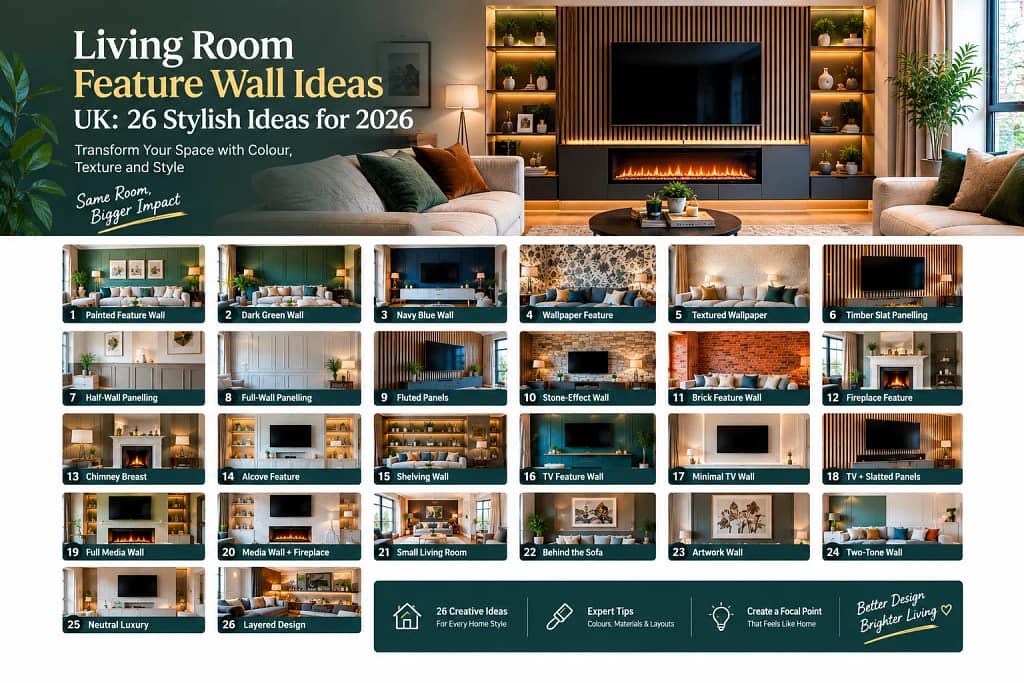
Living Room Feature Wall Ideas
A well-designed feature wall can completely change the character of a living room without requiring a full renovation. From a simple painted wall or textured wallpaper to timber panelling, a fireplace surround, an alcove feature or a built-in TV and media wall, there are plenty of ways to create a strong focal point.

For UK homes, the right feature wall is not simply about choosing something that looks good in a photograph. It should work with the room’s proportions, natural light, furniture layout and existing architectural features such as fireplaces, chimney breasts and alcoves.
Whether you live in a Victorian terrace, a 1930s semi-detached house, a modern flat or a new-build home, the right feature wall can add depth, warmth and personality to your living room.
Quick Answer
The most popular living room feature wall ideas include paint, wallpaper, wood panelling, fluted panels, stone-effect finishes, exposed brick, built-in shelving, fireplace walls, chimney-breast features, alcoves and TV/media walls .
For a modern UK home, timber slats, textured finishes and a carefully planned TV feature wall can create a contemporary focal point. In Victorian and Edwardian properties, working with an existing chimney breast or alcoves can produce a more natural result that complements the character of the room.
If your TV is the main focal point, a media wall can combine the television, storage, lighting and an electric fireplace into one integrated design. For more inspiration, see our Media Wall Ideas UK guide .
26 Living Room Feature Wall Ideas
1. Create a Painted Feature Wall
Painting one wall in a contrasting colour is one of the simplest ways to create a feature wall.
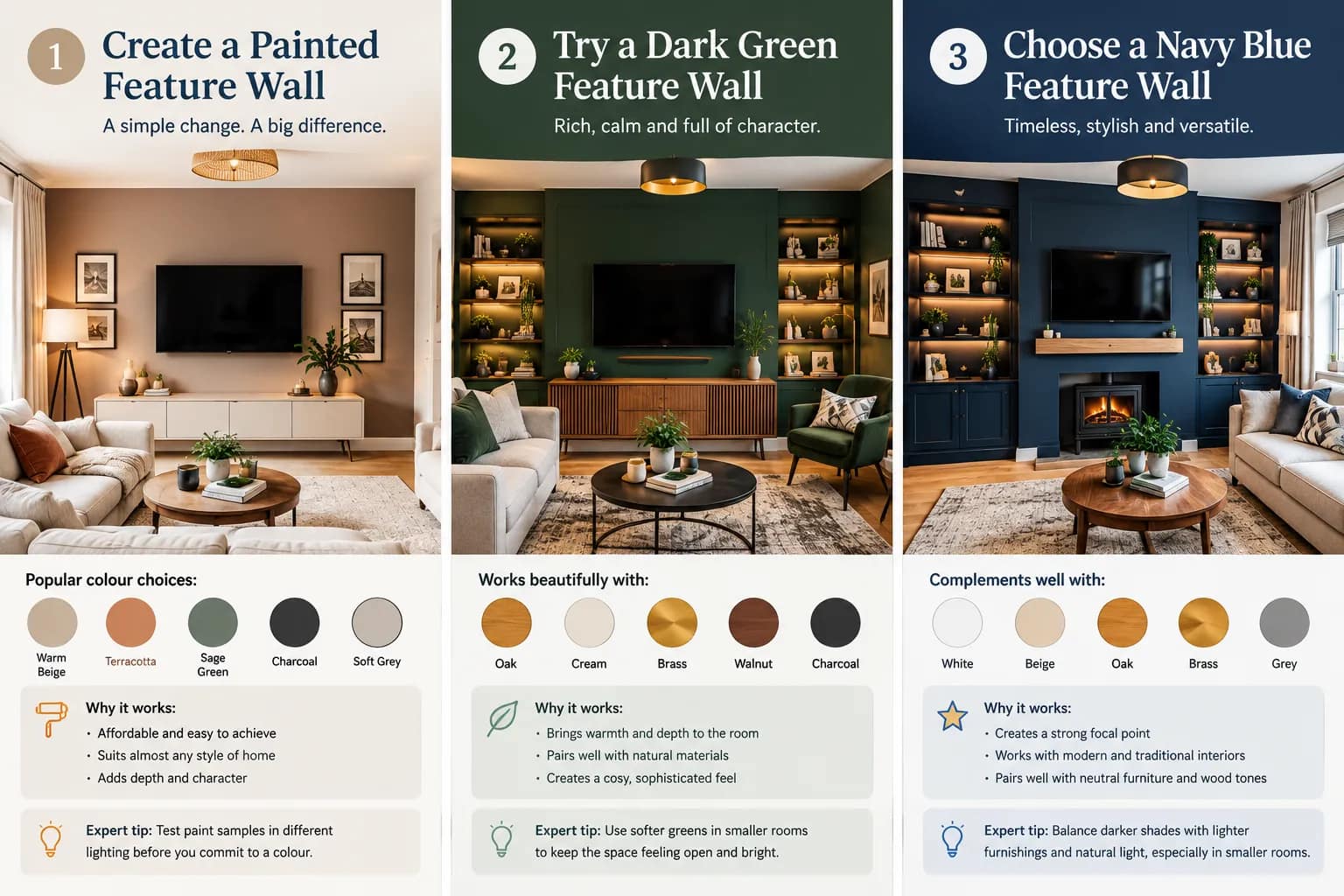
You do not necessarily need a very dark or dramatic shade. Soft greens, warm beige, muted terracotta, navy, charcoal and earthy neutrals can all create depth without overwhelming the room.
Before committing to a colour, test samples at different times of the day. Natural light can make the same paint appear very different in the morning, afternoon and evening.
Best for: Budget-friendly makeovers
Works with: Almost any living room style
DIY difficulty: Easy
2. Try a Dark Green Feature Wall
Deep green is a useful choice if you want your living room to feel warm, sophisticated and connected to natural materials.
Pair it with oak, walnut, cream upholstery, brass details or warm lighting. A dark green wall can also provide an effective backdrop for artwork, shelving or a television.
For smaller rooms, consider using a slightly softer green rather than an almost-black shade.
3. Choose a Navy Blue Feature Wall
Navy blue creates a strong focal point while remaining relatively easy to style.
It works particularly well with white, warm neutrals, oak, walnut and brass. In period homes, navy can also complement an original fireplace or traditional architectural details.
If the room receives limited daylight, balance the darker wall with lighter furniture, curtains and flooring.
4. Use Wallpaper as the Feature
Wallpaper allows you to introduce pattern, texture and colour without changing the entire room.
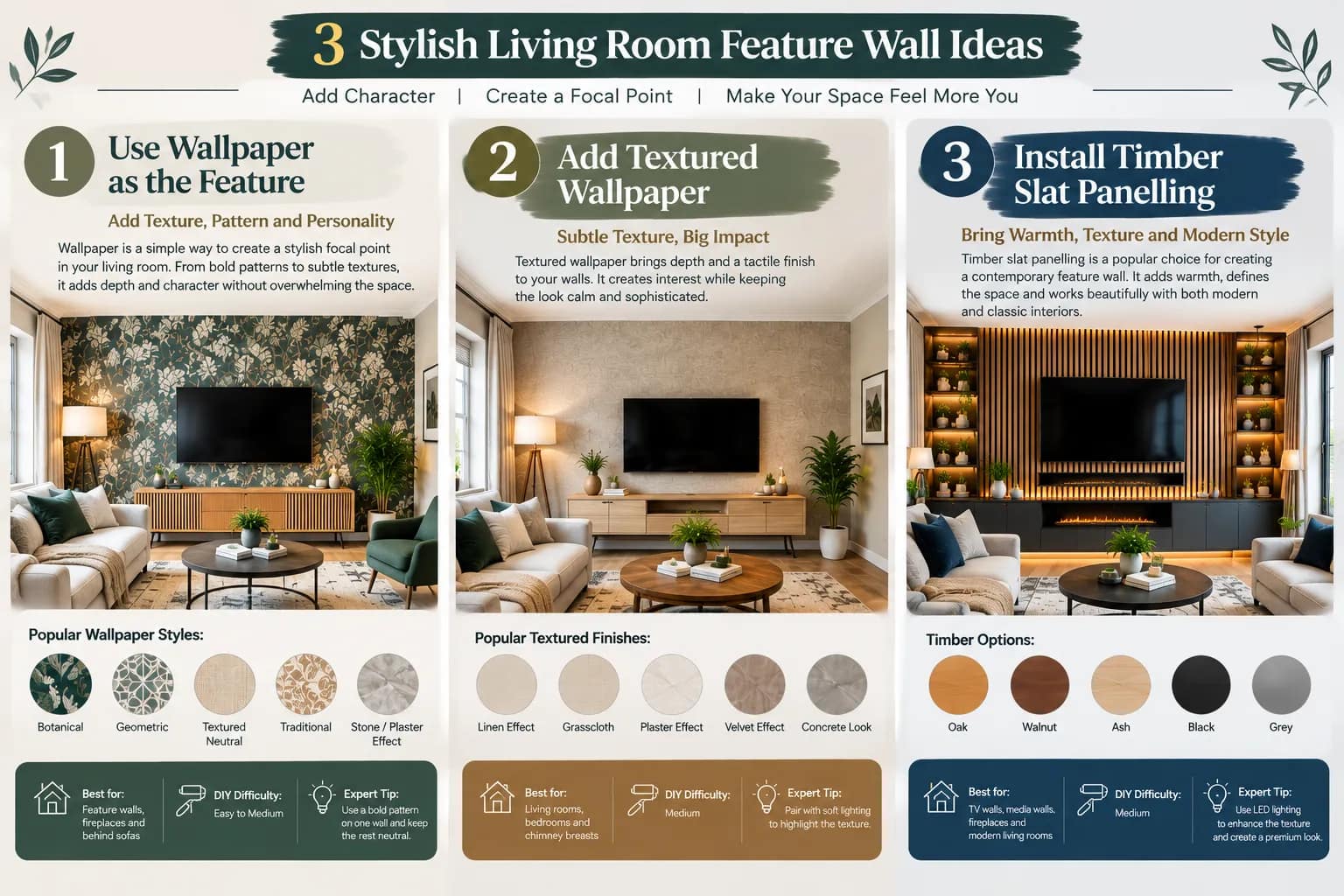
Popular directions include:
- Botanical patterns
- Geometric designs
- Textured neutrals
- Traditional prints
- Contemporary abstract patterns
- Grasscloth-style finishes
- Subtle stone or plaster effects
A feature wall is often the easiest place to experiment with wallpaper because you are covering a smaller area than you would with a whole-room installation.
5. Add Textured Wallpaper
If you prefer a more understated look, textured wallpaper can create interest without introducing a strong pattern.
Linen-effect, plaster-effect and grasscloth-style wallpapers can add subtle depth to neutral living rooms.
This approach is particularly useful when the rest of the room already contains strong furniture, artwork or architectural features.
6. Install Timber Slat Panelling
Timber slats add warmth and vertical texture to a living room.
Oak is a popular choice for lighter Scandinavian-inspired interiors, while walnut and darker wood finishes create a richer, more sophisticated appearance.
Slatted walls can be used behind a TV, fireplace, sofa or shelving. However, covering an entire small room with strong timber texture can make the space feel visually busy, so consider using it selectively.
For more ideas around contemporary media-wall finishes, see our Media Wall Ideas UK guide .
7. Use Half-Wall Panelling
Half-wall panelling is a practical option for traditional and transitional interiors.
Install decorative panels across the lower portion of the wall and paint the upper section in a complementary shade. The result adds architectural detail without making the entire wall feel heavy.
It can also be useful in busy family living rooms because the lower section is easier to clean and touch up.
8. Create Full-Wall Decorative Panelling
Full-wall panelling can give a plain wall considerably more architectural character.
MDF mouldings, traditional panel strips and shaker-style designs can work particularly well in Victorian, Edwardian and other period properties.
For a contemporary finish, paint the panelling and the wall behind it in the same colour. This creates texture without introducing another competing shade.
9. Add Fluted Wall Panels
Fluted panels provide vertical texture while maintaining a clean, contemporary appearance.
They can be used across an entire feature wall or limited to the section behind a TV, fireplace or shelving.
For media-wall applications, make sure the panel system is suitable for the intended installation and that electrical and ventilation requirements are considered before fitting.
Your site also has a dedicated Fluted Panel Media Wall UK page available for readers who want to explore this finish in more detail.
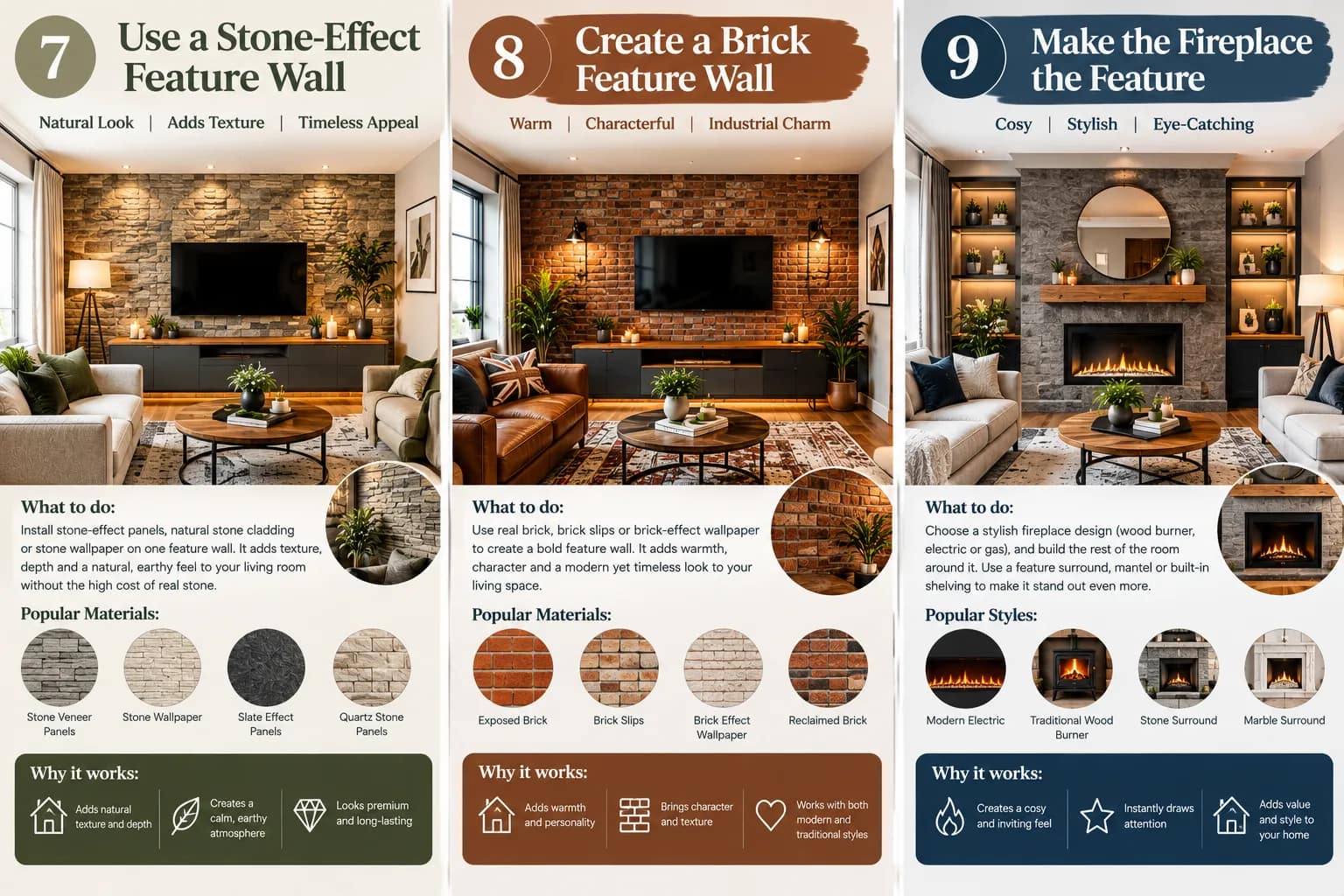
10. Use a Stone-Effect Feature Wall
Stone-effect finishes can introduce a natural, substantial look without necessarily using full-depth natural stone.
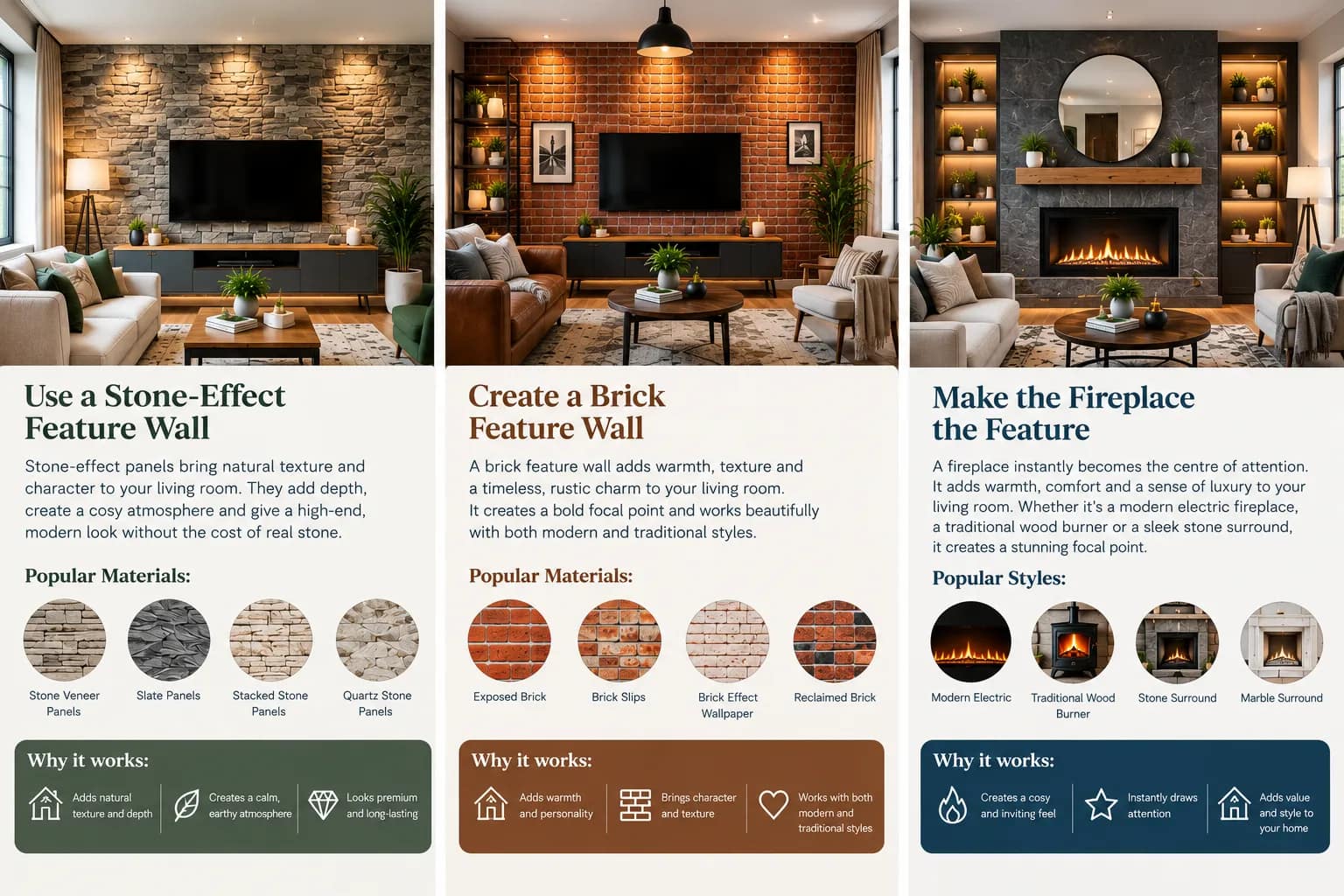
They can work well around:
- Fireplaces
- TV areas
- Chimney breasts
- Built-in shelving
- Large open-plan living rooms
Natural stone can be heavy and expensive, so check the wall construction and installation requirements before choosing a real-stone finish.
11. Create a Brick Feature Wall
Exposed brick can work beautifully in older properties and industrial-style interiors.
If the original brickwork is already present, carefully restoring it can create a genuine architectural feature. Where there is no suitable exposed brick, brick slips can provide a similar visual effect with less depth.
The key is restraint. Brick usually provides enough visual texture on its own, so keep the surrounding colours and furniture relatively controlled.
12. Make the Fireplace the Feature
A fireplace naturally creates a focal point, so rather than competing with it, make the fireplace the centre of the feature wall.
You could combine it with:
- Decorative panelling
- Stone-effect materials
- Timber
- A painted chimney breast
- Built-in shelving
- Integrated lighting
If you are considering mounting a TV above the fireplace, viewing height, heat, ventilation and cable routing need to be considered carefully.
For more detailed guidance, see our TV Above Fireplace Safety UK guide .
13. Highlight the Chimney Breast
A chimney breast is already an architectural focal point, particularly in Victorian and Edwardian homes.
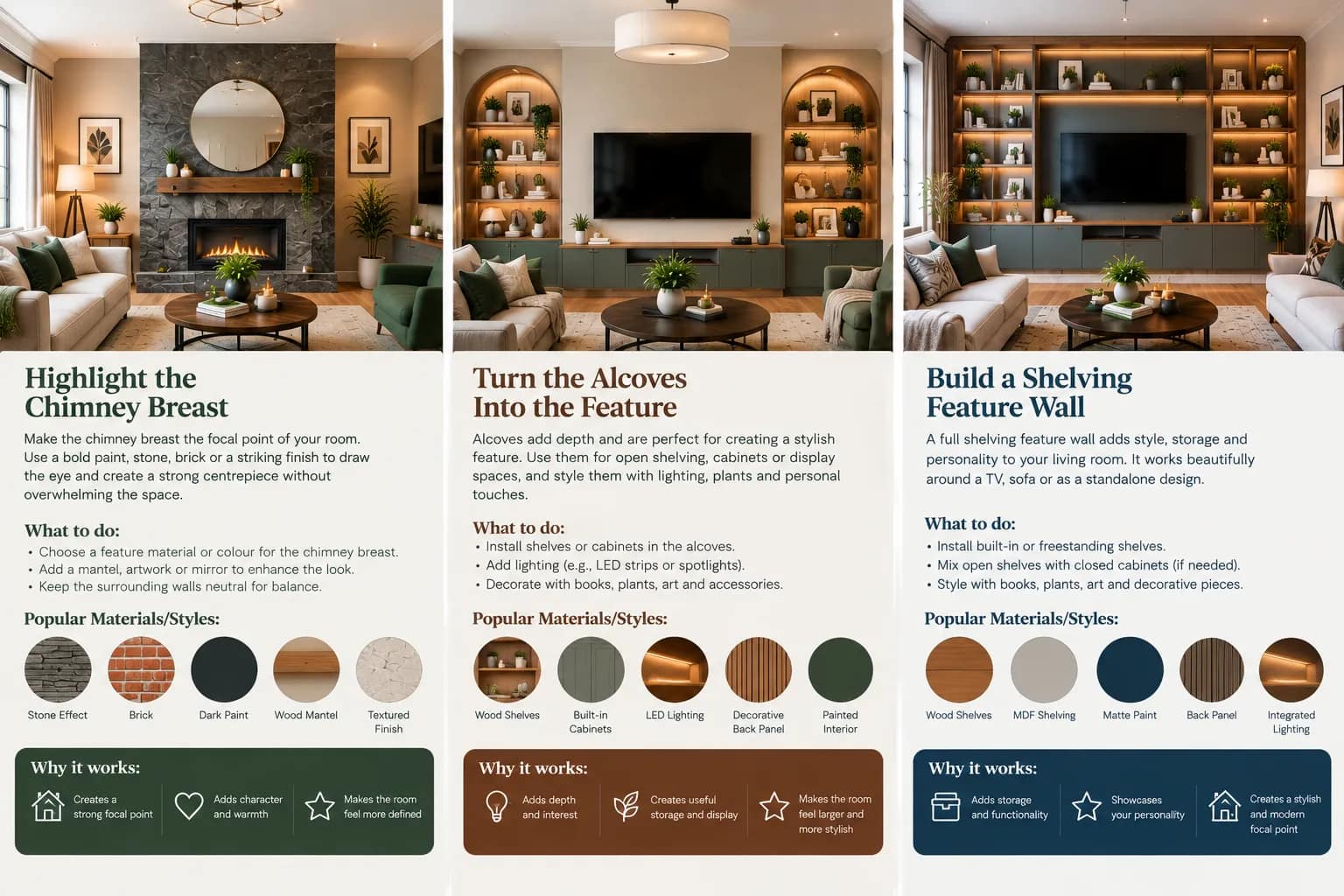
Instead of trying to hide it, emphasise it.
Options include painting the chimney breast in a contrasting colour, adding wallpaper, installing timber panelling or using it as the backdrop for a fireplace or TV.
Where alcoves sit either side, you can introduce shelving or cupboards to create a balanced built-in arrangement.
14. Turn the Alcoves Into the Feature
Living rooms with alcoves provide an excellent opportunity to create a feature without covering an entire wall.
Consider:
- Built-in shelving
- Painted alcoves
- Cupboards
- Integrated lighting
- Timber backing panels
- Wallpaper
- Decorative objects and artwork
If the chimney breast is being used for a TV or media wall, the alcoves can provide valuable storage and help balance the overall composition.
15. Build a Shelving Feature Wall
Open shelving can turn a plain wall into a personalised display.
Use a mixture of books, artwork, plants, ceramics and decorative objects rather than filling every shelf.
Closed cupboards can be incorporated underneath to hide less attractive everyday items such as games consoles, cables and remote controls.
The most successful shelving arrangements usually include some empty space. Leaving breathing room prevents the wall from looking cluttered.
16. Create a TV Feature Wall
For many modern living rooms, the TV is already the main focal point, so designing the wall around it can make the entire room feel more intentional.
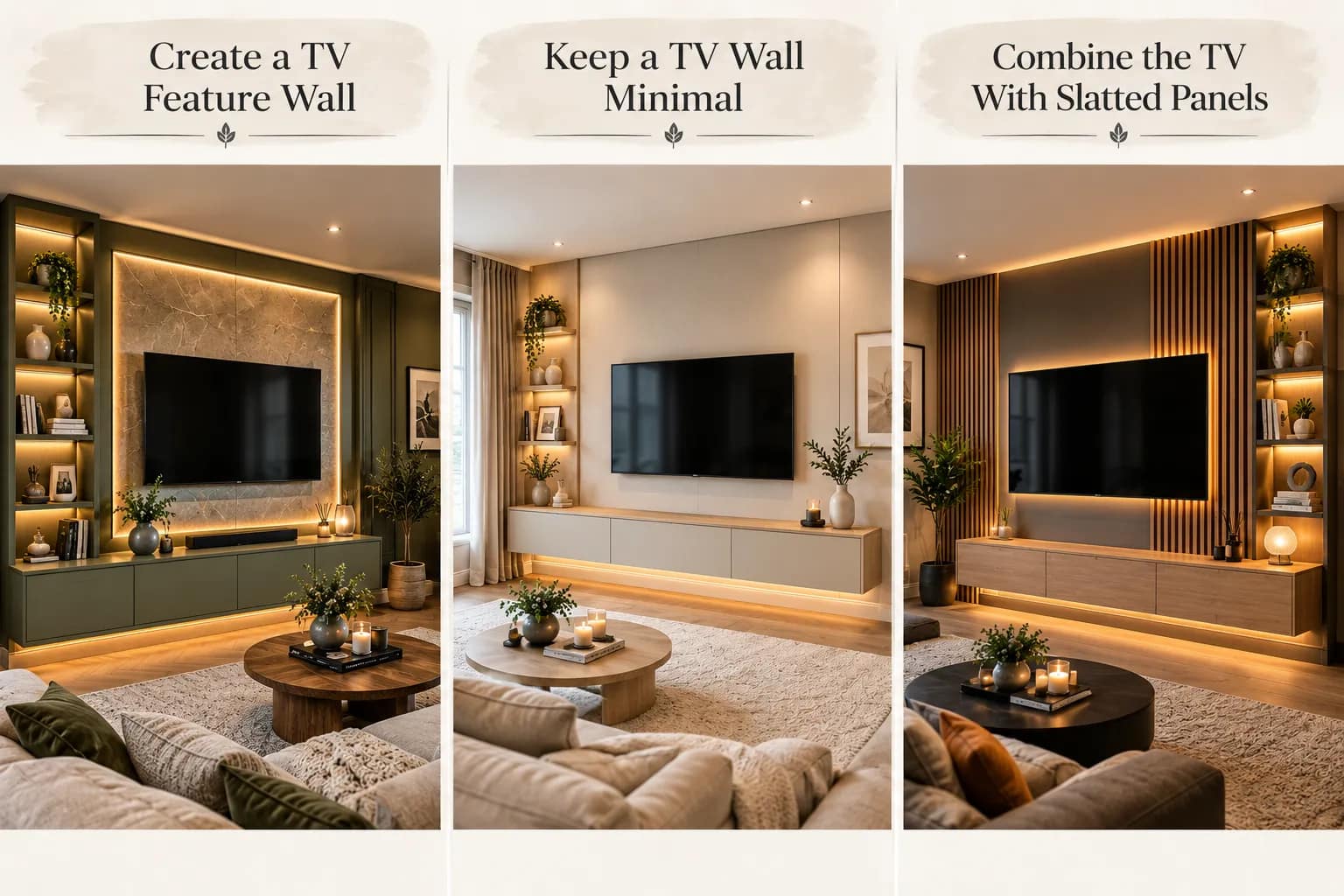
A TV feature wall can include:
- A painted backdrop
- Timber panelling
- Fluted panels
- Built-in shelving
- Low-level storage
- LED lighting
- Concealed cables
- A fireplace
- Soundbar storage
Think about the complete composition rather than simply mounting the TV in the middle of a wall.
You also need to consider viewing height, cable access, socket positions and whether the wall will accommodate a larger TV in the future.
17. Keep a TV Wall Minimal
A minimalist TV feature wall does not need to include lots of built-in elements.
A carefully painted wall, slim TV bracket and concealed cables can be enough.
This approach works especially well in smaller living rooms where additional cabinetry could make the wall feel too dominant.
For TV mounting options, see our Best TV Mount for Media Walls UK guide .
18. Combine the TV With Slatted Panels
A slatted feature wall behind the TV introduces texture while creating a clear visual zone for the entertainment area.
You can use timber across the whole wall or create a narrower panel behind the television.
If you are installing a soundbar, plan its position before the panels are fitted. The soundbar should not be accidentally enclosed or obstructed by the surrounding design.
Our Soundbar Placement Media Wall UK guide covers the main placement considerations in more detail.
19. Create a Full Media Wall
A media wall can combine several functions into one cohesive feature.
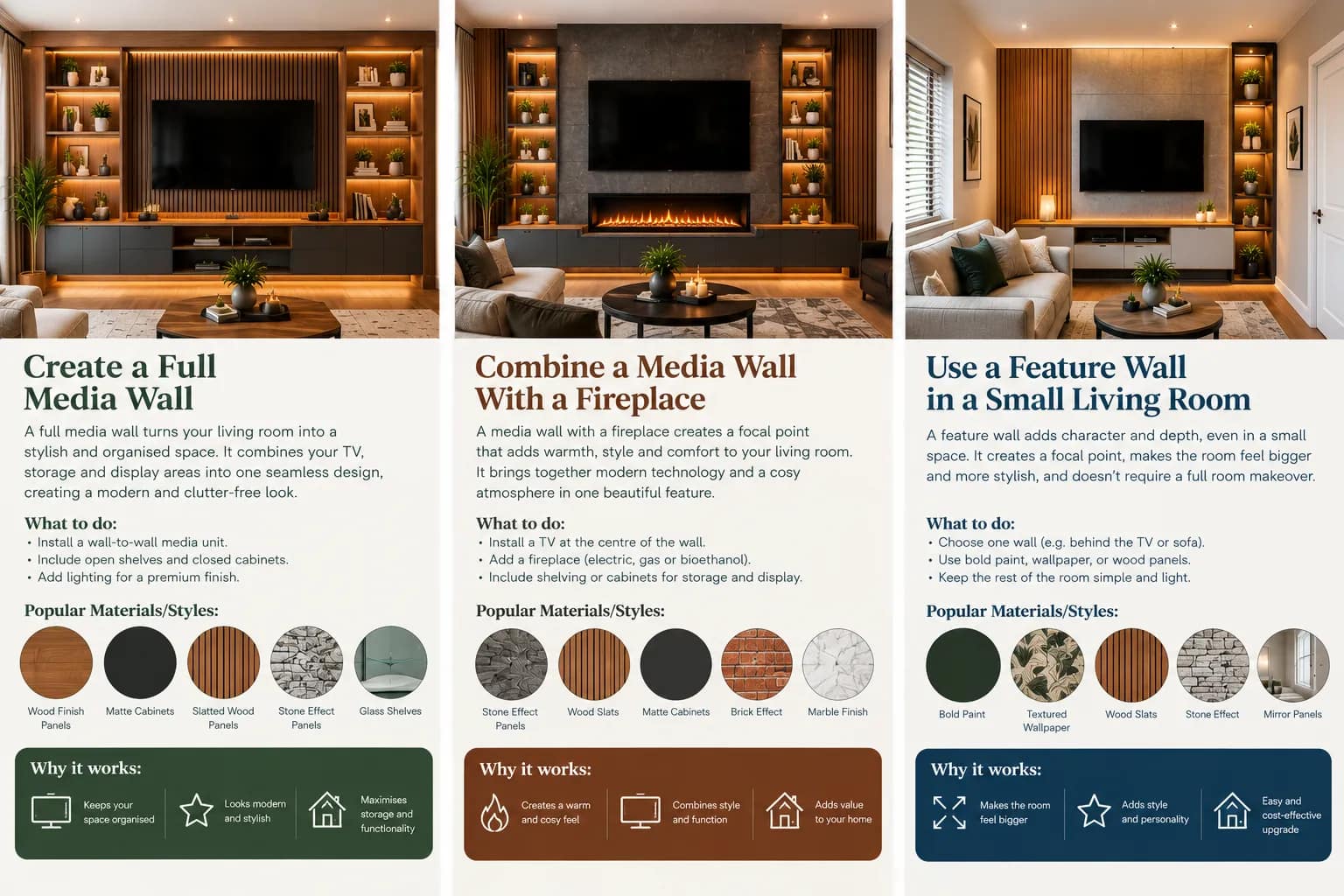
A typical design might include:
- TV
- Electric fireplace
- Storage
- Shelving
- LED lighting
- Cable management
- Decorative panelling
However, not every living room needs a full media wall. In a smaller or minimalist space, a simple TV feature wall may provide a cleaner result.
If you are considering a complete media wall, start with our How to Build a Media Wall UK guide .
20. Combine a Media Wall With a Fireplace
A TV and fireplace combination can create a strong central focal point.
The important thing is to design the television, fireplace, shelving and surrounding finishes as one composition rather than treating each element separately.
You should also follow the fireplace manufacturer’s installation instructions, including any specified clearances and material requirements.
For dedicated inspiration, see our Media Wall With Fireplace UK guide .
21. Use a Feature Wall in a Small Living Room
Small living rooms need a little more restraint.
Rather than using several competing finishes, choose one strong feature and allow the rest of the room to remain relatively simple.
Good options include:
- A painted feature wall
- Light timber panelling
- Subtle wallpaper
- Vertical fluted panels
- A slim TV installation
- Shallow built-in storage
For more space-specific inspiration, see our Small Living Room Media Wall Ideas guide .
22. Put the Feature Wall Behind the Sofa
A feature wall does not have to be behind the TV.
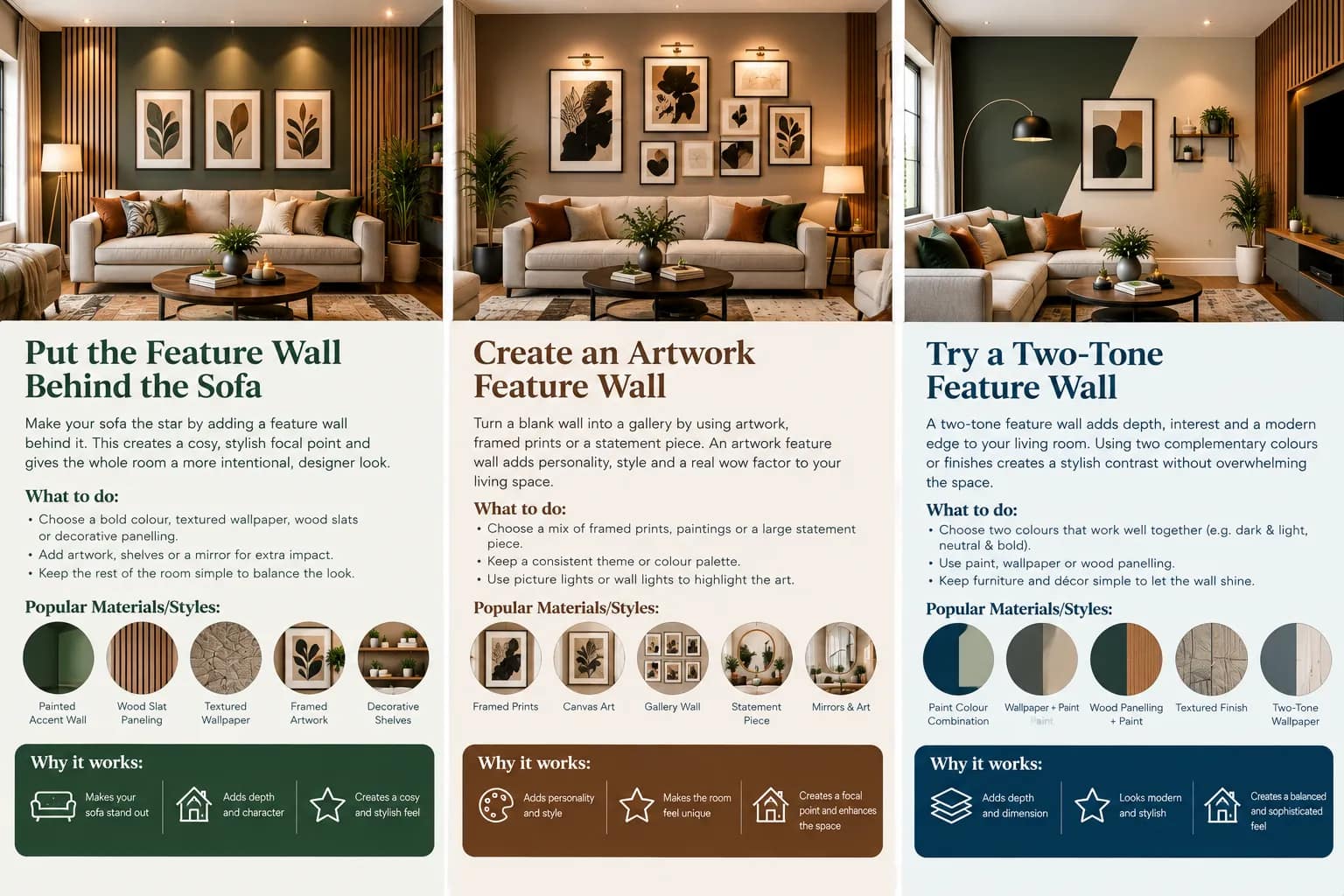
The wall behind a sofa can become the focal point with wallpaper, artwork, panelling or a deeper paint colour.
This can be especially effective where the TV is positioned elsewhere in the room or where you want the living room to feel less dominated by technology.
A large piece of artwork above the sofa can also create a strong focal point without requiring construction work.
23. Create an Artwork Feature Wall
One oversized artwork can be enough to transform a plain wall.
Choose a piece that relates to the room’s existing colour palette, then use lighting to draw attention to it.
Picture lights or discreet directional lighting can add another layer to the design, particularly in the evening.
Avoid hanging several unrelated small pieces at random. A deliberate gallery arrangement or one large statement piece usually creates a clearer visual focus.
24. Try a Two-Tone Feature Wall
Two complementary colours can add depth without requiring panelling or wallpaper.
Some combinations to consider include:
- Warm white and olive
- Beige and terracotta
- Cream and navy
- Greige and charcoal
- Soft taupe and deep green
You can also use colour to emphasise architectural details such as chimney breasts, alcoves or built-in shelving.
25. Create a Neutral Luxury Feature Wall
A sophisticated feature wall does not have to be dark or highly decorative.
Warm neutrals, natural timber, stone-effect textures, subtle panelling and carefully positioned lighting can create a refined appearance.
The key is consistency. Choose a small number of materials and repeat them throughout the room rather than mixing too many finishes.
For more inspiration, see our Luxury & Minimalist Media Walls guide .
26. Layer Paint, Panelling and Lighting
For a more developed feature wall, combine several subtle elements rather than relying on one dramatic finish.
For example, you could use:
Warm neutral paint + timber panelling + concealed LED lighting + low-level storage
This creates several layers of texture and light while keeping the overall palette controlled.
If you are incorporating lighting into a TV or media feature wall, our Media Wall Lighting Guide covers the subject in greater detail.
Which Wall Should Be Your Feature Wall?
The most obvious wall is not always the best one.
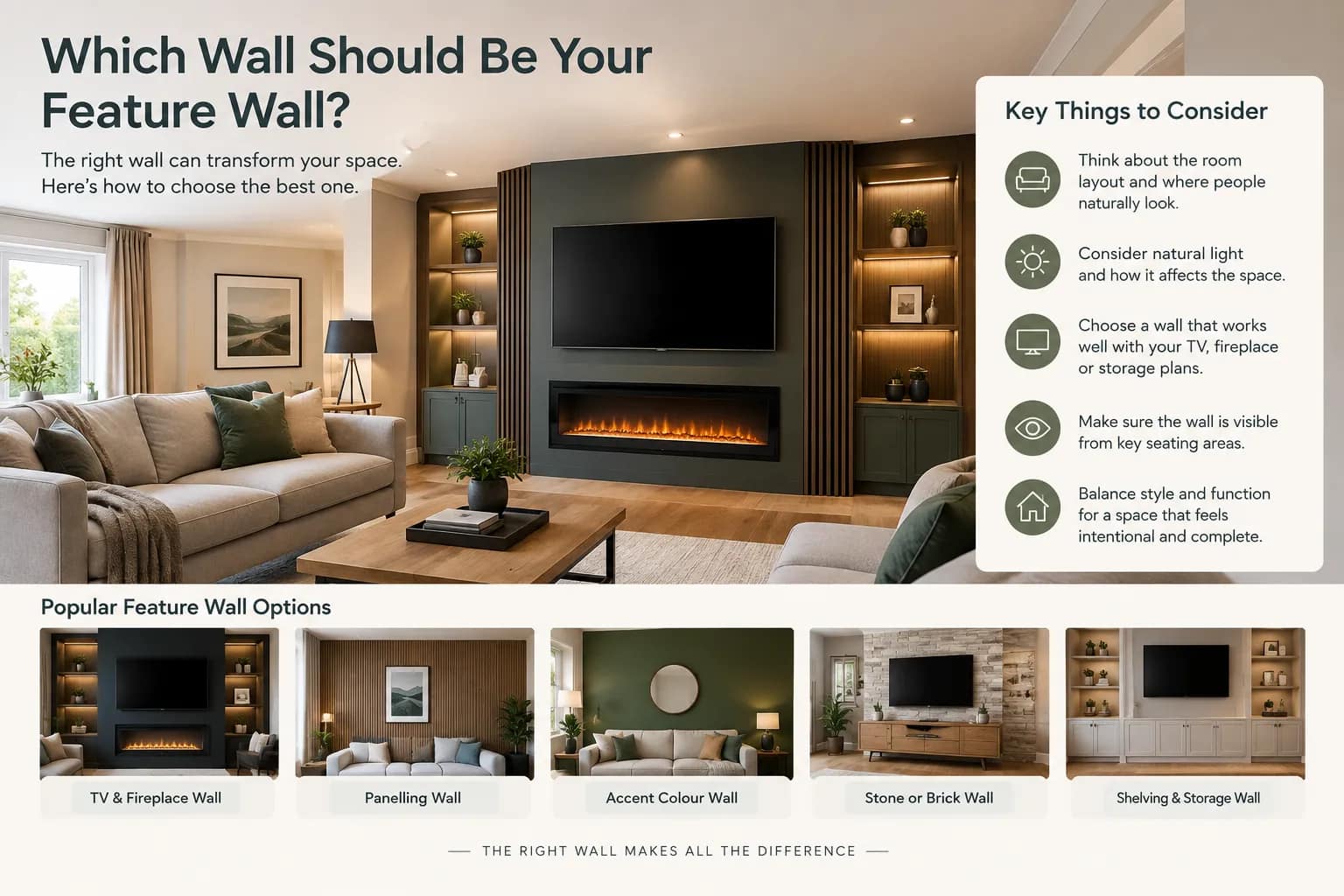
Start by looking at the room from the main seating position. Which wall naturally attracts your attention?
The best candidate is usually:
- The wall behind the TV
- The wall containing the fireplace
- A chimney breast
- The wall behind the sofa
- A large uninterrupted wall
Avoid choosing a wall simply because it is empty. Doors, windows, radiators and furniture can affect how successful the finished feature looks.
In a traditional UK living room, a chimney breast may already provide the strongest architectural focal point. In a modern open-plan room, the TV wall may need more deliberate planning.
Living Room Feature Walls for Different UK House Types
Victorian and Edwardian Homes
Period properties often have features worth preserving, including chimney breasts, fireplaces, ceiling details and alcoves.
Rather than covering these features completely, use paint, wallpaper, panelling or built-in storage to enhance them.
An alcove-and-chimney-breast arrangement can be particularly effective because the architecture already provides natural symmetry.

1930s Homes
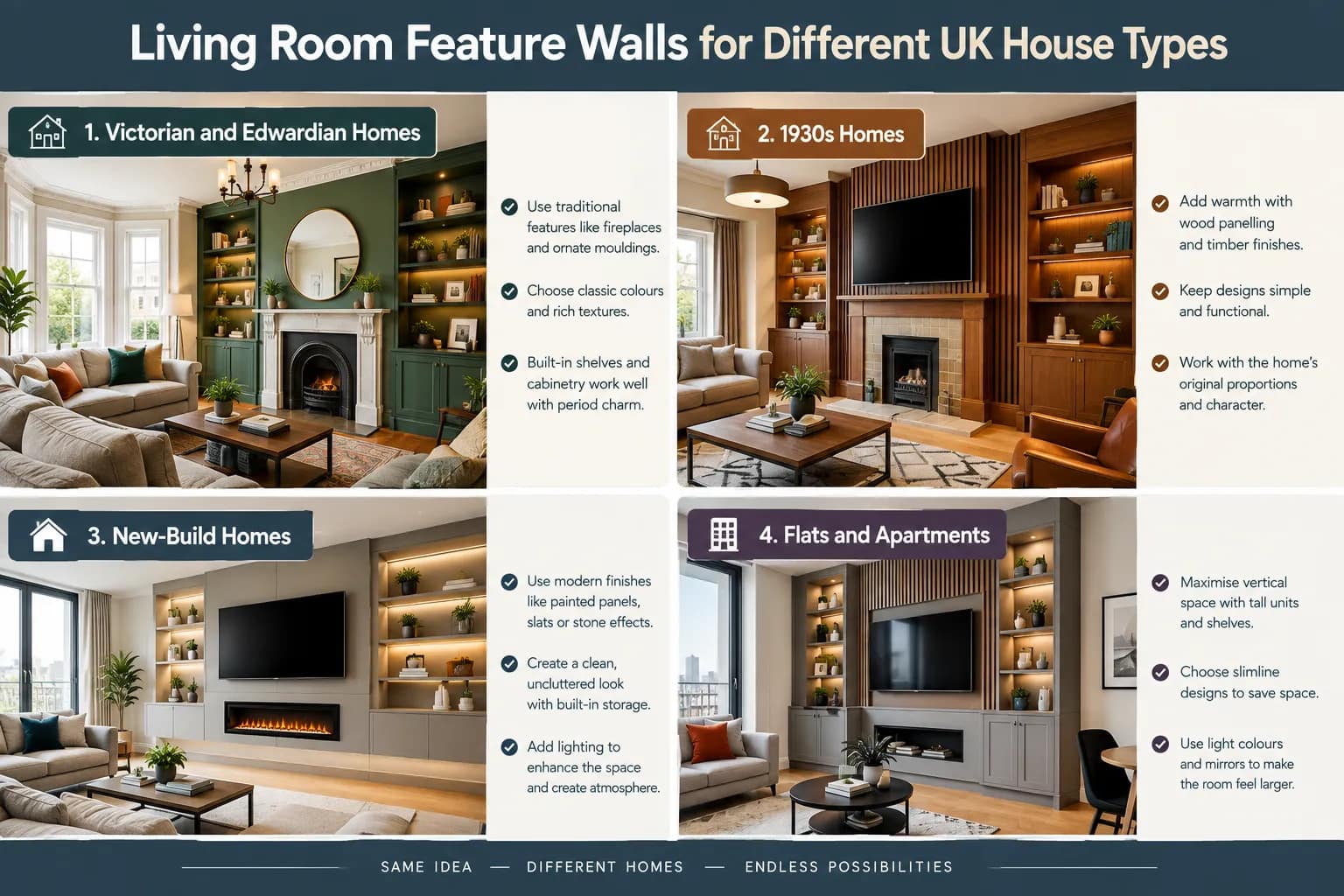
1930s living rooms often provide more straightforward wall layouts than Victorian terraces.
A painted feature wall, timber panelling or modern TV installation can work well without competing with excessive decorative detail.
If the room has an original fireplace, use it as part of the composition rather than treating it as an obstacle.
New-Build Homes
New-build living rooms often have fewer architectural features, which means a feature wall can introduce much-needed character.
Timber slats, decorative panelling, wallpaper, built-in storage and media walls can all help create a stronger focal point.
Flats and Apartments
In flats, wall depth, electrical points and landlord or building-management restrictions may affect what you can install.
If you are renting, consider reversible options such as paint, removable wallpaper or freestanding furniture rather than permanent built-in construction.
Best Feature Wall Materials for a UK Living Room
| Material
|
Appearance | Cost level | Maintenance | Suitable for |
| Paint | Clean and simple | £ | Low | Most rooms |
| Wallpaper | Patterned or textured | £–££ | Low–Medium | Feature walls |
| MDF panelling | Architectural | ££ | Low | Traditional and modern rooms |
| Timber slats | Warm and contemporary | ££–£££ | Low | TV and feature walls |
| Fluted panels | Textured and modern | ££ | Low | Contemporary rooms |
| Brick slips | Industrial/traditional | ££ | Low | Character interiors |
| Stone-effect panels | Natural and substantial | ££–£££ | Low | Fireplaces and TV walls |
| Built-in media wall | Fully integrated | £££ | Medium | TV, storage and fireplace combinations |
For more detailed information about construction materials, see our Best Materials for Media Walls guide .
How Much Does a Feature Wall Cost in the UK?
The price depends heavily on the material, wall size and whether you are doing the work yourself or paying for professional installation.
As a general guide:
- Paint: lowest-cost option
- Wallpaper: low to medium, depending on the paper and installation
- Decorative panelling: medium
- Timber or fluted panels: medium to high
- Built-in TV/media wall: higher, particularly when electrical work, lighting, storage and a fireplace are included
For current media-wall pricing and the factors that affect the final quotation, see our Media Wall Cost UK guide .
If you are working to a tight budget, our Budget Media Wall UK guide covers lower-cost approaches.
DIY or Professional Installation?
Painting and many wallpaper projects are realistic DIY jobs if you have the necessary preparation and decorating skills.
Decorative panelling can also be suitable for confident DIYers, provided the wall is properly measured and prepared.
More complicated feature walls require greater care. This includes installations involving:
- Fixed electrical work
- Recessed sockets
- Integrated lighting
- Electric fireplaces
- Structural alterations
- Heavy materials
- Built-in cabinetry
For a complete media wall, see our DIY vs Professional Media Wall Cost guide .
Feature Wall Cable Management
If your feature wall includes a TV, soundbar, games console or lighting, plan the cables before the wall is finished.
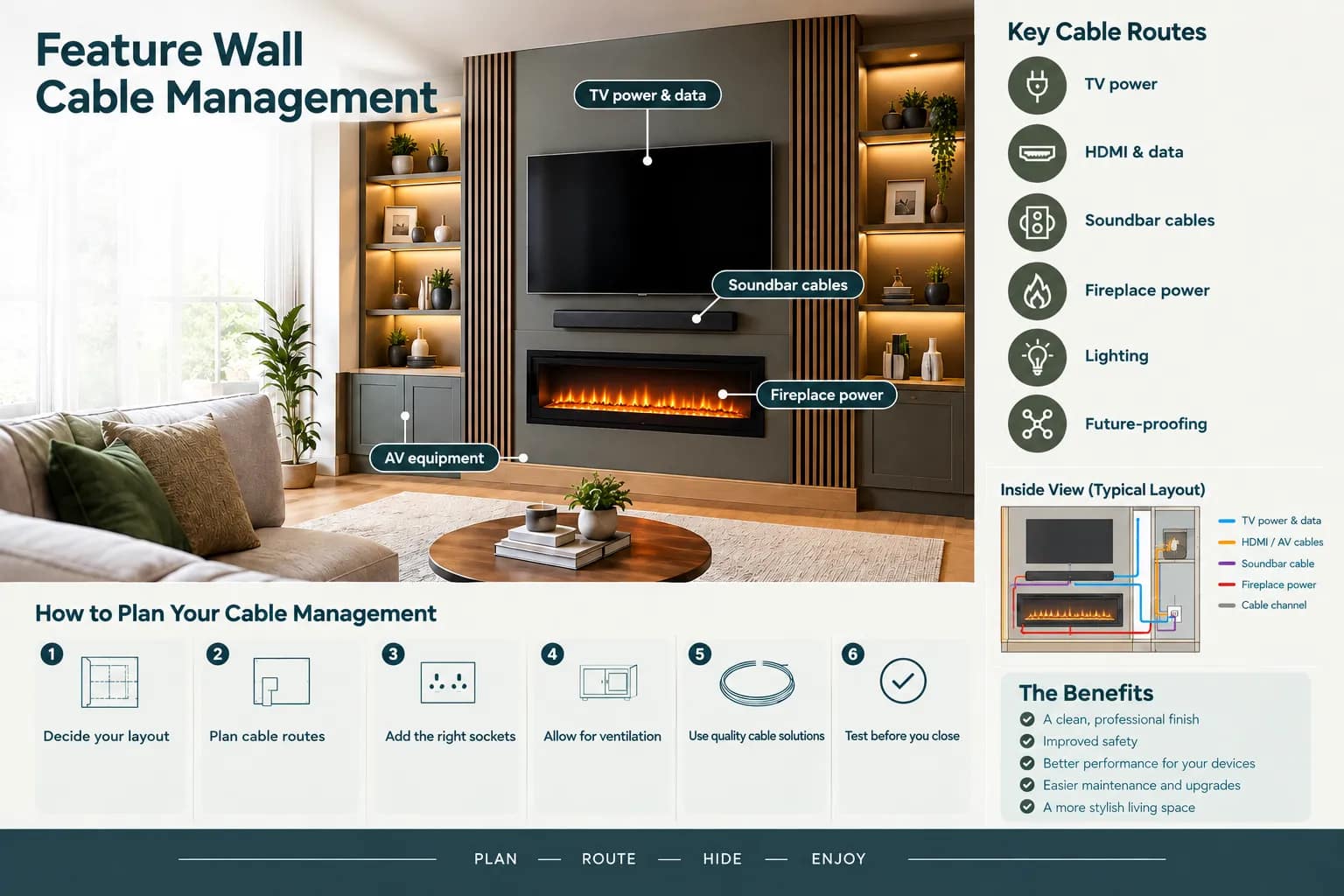
Consider where you will need connections for:
- TV power
- HDMI
- Ethernet
- Soundbar
- Games consoles
- Streaming devices
- LED lighting
Do not simply hide cables behind a finished wall without considering future access and the type of installation involved.
In England, fixed electrical work in dwellings is covered by Part P of the Building Regulations. Always check the current requirements that apply to your project and location. For official guidance, see GOV.UK: Electrical Safety — Approved Document P .
For practical cable-planning advice, see our Media Wall Wiring & Cable Management UK guide .
TV Above a Fireplace: What Should You Consider?
Mounting a TV above a fireplace requires more planning than simply choosing a suitable bracket.
Consider:
- Viewing height — the TV may end up higher than is comfortable for some seating positions.
- Heat — follow the fireplace manufacturer’s instructions and specified clearances.
- Ventilation — ensure the installation does not obstruct required airflow.
- Cables — plan power and signal cables before construction.
- Access — make sure equipment remains serviceable after installation.
- Fire safety — use appropriate materials and follow applicable requirements.
For further information, see our TV Above Fireplace Safety UK guide .
Common Living Room Feature Wall Mistakes
1. Creating Too Many Feature Walls
If every wall is competing for attention, none of them feels like the focal point.
Choose one main feature and allow the rest of the room to support it.
2. Choosing Colour Without Testing It
Paint can look dramatically different depending on natural and artificial lighting.
Always test a sample before committing to the whole wall.
3. Ignoring the Room’s Proportions
A heavily textured wall can overwhelm a narrow room, while a very small feature may look lost on a large wall.
Consider the size and shape of the room before choosing the finish.
4. Mounting the TV Too High
A beautiful TV wall can still be uncomfortable if the screen is positioned too high.
Plan the TV position around the seating rather than simply centring it vertically on the wall.
5. Forgetting Future Technology
Your current TV, soundbar and games console may not be the only equipment you use.
Leave sensible access for future upgrades where possible.
6. Making Cables Impossible to Reach
Concealed cables look much cleaner, but maintenance and future upgrades still matter.
Plan access before the wall is closed.
7. Mixing Too Many Materials
Timber, stone, fluted panels, wallpaper, paint and decorative lighting can all look good individually.
Used together without a clear plan, however, they can make the wall feel cluttered.
How to Make a Feature Wall Look Expensive
A high-end appearance is usually more about planning and consistency than simply spending more money.
Focus on:
- Accurate measurements
- Good wall preparation
- Consistent panel spacing
- A controlled colour palette
- Concealed cables
- Well-positioned lighting
- Quality finishing
- Appropriate furniture scale
- Clean junctions between materials
A simple painted wall that has been properly prepared can look more sophisticated than an expensive feature wall with poor finishing.
Modern Feature Wall Combinations for 2026
If you want a contemporary living room, consider combinations such as:
- Warm white + natural oak
- Greige + fluted panels
- Deep green + timber
- Charcoal + warm lighting
- Beige + textured wallpaper
- Walnut + cream
- Stone-effect finish + black details
- Painted chimney breast + built-in shelving
- TV + timber panels + integrated lighting
- TV + fireplace + storage + neutral panelling
The goal is not to use every current trend at once. Choose the combination that suits your property, furniture and existing finishes.
How to Plan Your Living Room Feature Wall
Before buying materials, measure the entire wall rather than just the section you intend to decorate.
Record:
- Wall width
- Ceiling height
- Door positions
- Window positions
- Radiator location
- Existing sockets
- TV size
- Furniture position
- Fireplace dimensions
- Required storage
- Proposed wall depth
If you are planning a media wall, also think about cable routes, soundbar placement, lighting and future equipment.
For a more structured approach, see our Planning Your Media Wall UK guide .
You can also use our Media Wall Layout Calculator to help plan the proportions of a TV/media-wall installation.
Living Room Feature Wall FAQs
Are feature walls still a good idea?
Yes. A feature wall remains a useful way to introduce colour, texture or architectural detail without redesigning the entire room.
The key is choosing a wall and finish that suit the room’s proportions and existing style.
Which wall should be the feature wall?
The TV wall, fireplace wall, chimney breast or wall behind the sofa are common choices.
Look at the room from the main seating position and identify which wall naturally provides the strongest focal point.
What is the best colour for a living room feature wall?
There is no single colour that suits every room.
Deep green, navy, warm neutrals, terracotta, charcoal and softer earthy colours can all work. The amount of natural light and the colours of your furniture should influence the final choice.
Is wall panelling a good idea for a living room?
Panelling can add architectural detail and texture to both modern and traditional interiors.
The design should be scaled to the wall and the room. Excessively heavy panelling can make smaller rooms feel busy.
Should I make my TV wall a feature wall?
If the TV is already the main focal point, designing the wall around it can make the room feel more cohesive.
You do not necessarily need a full media wall. A painted backdrop, timber panels or simple concealed-cable installation may be enough.
How much does a feature wall cost?
The cost varies significantly depending on the material and installation method.
Paint is generally the simplest option, while bespoke panelling, timber finishes and complete media walls require a larger budget.
Can I build a feature wall myself?
Simple painted walls, wallpaper and some decorative panelling can be suitable DIY projects.
TV/media walls involving fixed electrical work, fireplaces, heavy materials or structural changes may require specialist input.
What is the best feature wall idea for a small living room?
Keep the design relatively simple.
Paint, subtle wallpaper, light timber, vertical panelling or a slim TV installation can add interest without visually overwhelming the room.
How can I make a feature wall look modern?
Use clean lines, a controlled colour palette and a small number of materials.
Timber slats, fluted panels, warm neutrals, concealed lighting and integrated storage can all contribute to a contemporary look.
Final Thoughts
The best living room feature wall is one that works with the room rather than simply taking attention away from everything else.
For some homes, that may mean a bold painted wall or patterned wallpaper. For others, decorative panelling, timber slats, a fireplace or a chimney-breast feature will make more sense.
If the TV is already the main focal point, a carefully planned TV feature wall or media wall can combine entertainment, storage and lighting into one cohesive design.
The most important step is to consider the wall as part of the entire living room. Think about proportions, natural light, furniture, architectural features, materials, cables and how you actually use the space before deciding on the final design.